 Podcast StudioSan Antonio
Author
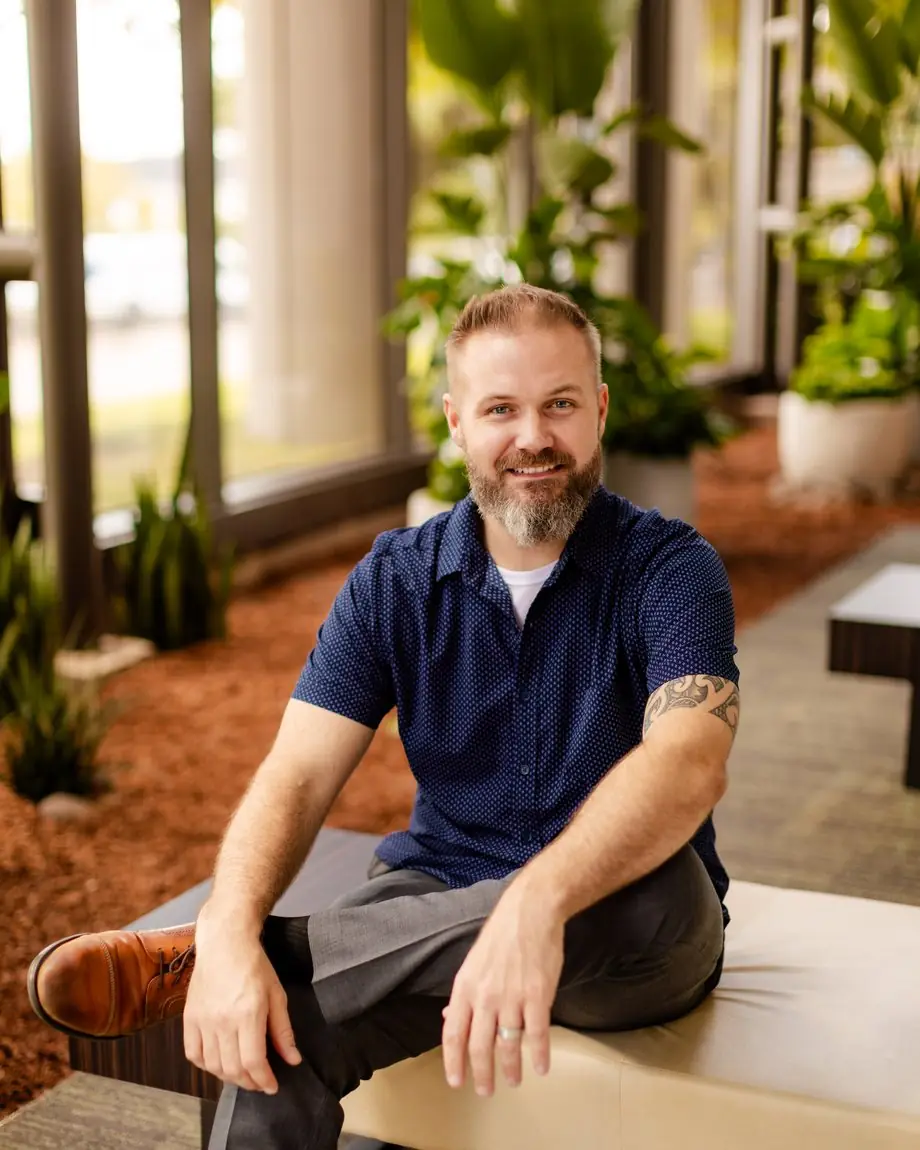
Matt Nelson
Founder · Peachtree Rose Marketing & Podcast Studio San Antonio
Former U.S. Army interrogator and Chinese linguist who treats marketing as human behaviour at scale. He builds the content and video systems that earn trust on an owner's behalf — so the trust keeps working when the owner isn't in the room.
Content and authority, built to run without you
Matt's work is the system that represents a business when its owner is somewhere else — the articles, the video, the recorded conversations that keep answering questions long after a meeting ends. Through Peachtree Rose Marketing he builds those engines for owners who cannot be everywhere, and through Podcast Studio San Antonio he runs the room where the raw material gets made.
The distinction he works from: most marketing tries to reach more people. This tries to be more convincing to the right people, repeatedly, without the owner present. Those are different problems with different solutions, and conflating them is why a lot of content spend produces nothing.
Why an interrogator ended up in marketing
Matt served as a U.S. Army interrogator and Chinese linguist. It is an unusual route into this work, and it shapes the whole approach: interrogation is not what films suggest. It is structured rapport — establishing enough credibility and enough safety that someone tells you something true, then listening carefully enough to know whether they did.
That maps onto marketing more cleanly than most marketing training does. Buying decisions are human behaviour at scale, not slogans. Language work adds the other half: meaning does not survive translation intact, and neither does a value proposition. What a business believes it is saying and what a buyer actually hears are two different messages, and closing that gap is most of the job.
It also explains a bias toward long-form. You cannot establish rapport in a thirty-second ad. You can establish it across an hour of someone thinking out loud.
Presence at scale: know, like and trust without the room
Everyone in sales has heard know, like and trust. The unspoken assumption is that all three are earned in person — a meeting, a call, a handshake — which caps how many people can ever reach the third stage. An owner's presence is the bottleneck.
Video removes the cap without removing the person. Know comes from repeat exposure: a face and a name stop being new. Like comes from the things that survive a camera and not a brochure — the pause before a hard answer, the willingness to say a thing plainly. Trust comes from watching someone be right, repeatedly, about things the viewer can check.
This is why Matt's emphasis is on recorded conversation rather than produced advertising. An advertisement asserts. A recorded conversation demonstrates, and it keeps demonstrating at three in the morning to someone the owner will never meet. It is also why the same asset now does double duty: the transcript that builds human trust is the transcript an AI assistant reads and quotes when someone asks it a question.
Facilitation and mentorship at the Growth Quarter Mastermind
Matt is one of four facilitators of the Growth Quarter Mastermind, a facilitator-led mastermind for business owners in San Antonio and Boerne, Texas. The four are operators rather than coaches — people who built the thing they are talking about — and each owns a lane. Matt's is content and authority.
Facilitation is a different discipline from consulting, and it is the one that connects most directly to the rest of his work. A consultant supplies the answer. A facilitator builds the conditions in which a room of owners reaches a better answer than any of them arrived with — which means asking the question that reframes the problem, and knowing when to stay quiet.
That is the same skill a good podcast host needs, and the same skill an interrogator needs. Mentorship in the mastermind and hosting in the studio are two expressions of one practice: get a capable person to say the true and useful thing out loud, then make sure it does not evaporate when the session ends.
What he works on
Matt writes here about video podcasting, answer-engine visibility, and the production systems that turn one recording into a durable body of work. The recurring argument across all of it: the asset is the archive, not the campaign.
- Video podcasting
- Answer engine optimization
- Content repurposing
- Local SEO
- Podcast production
- Brand authority
- Facilitation & mentorship
You bring the conversation. We handle everything after.
A room at I-10 and 410 with the gear already bought, already set, already rolling — Shure SM7B microphones into a RØDEcaster Pro II, Sony Alpha 6400 4K cameras, a professional teleprompter, and acoustic treatment that is already done arguing with your voice.
Then the part most shows never get to. The edit, the clips, the written page, the scheduling — handled, so an hour in the studio turns into a month of content instead of a file sitting on a drive.
— Podcast Studio San Antonio, I-10 & 410