 Podcast StudioSan Antonio
AI Podcasts Are Flooding the Apps. Here’s Why Human Shows Win (and Get Found)
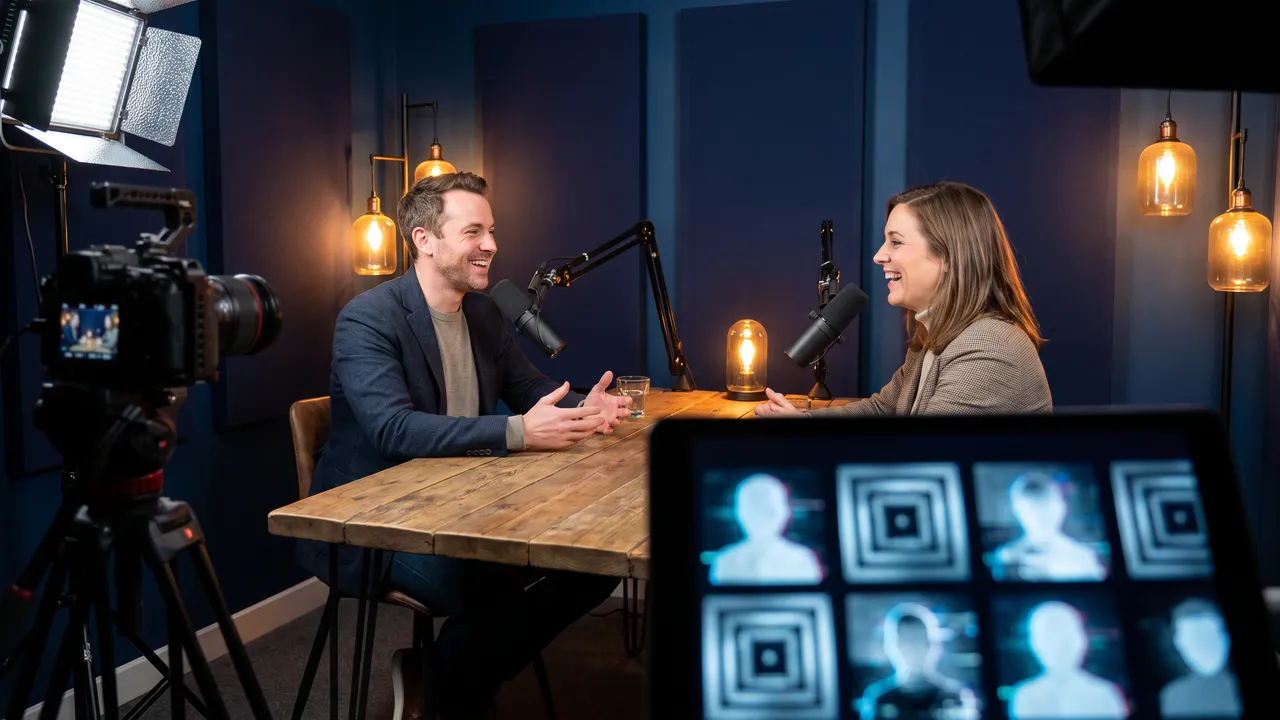
Anyone can now generate a podcast without a microphone, a guest or a single real opinion. Some operators are publishing thousands of these shows a day. That sounds like bad news for a business owner trying to build an audience, but the research says the opposite: listeners don't want synthetic hosts, and they're using AI to find shows worth their time. Here's what's happening, what listeners actually want, and how to make your show the one that gets found.
The news
AI-Generated Podcasts Are Already in the Feeds
Two stories from Podnews in November 2026 show how quickly synthetic shows are scaling:
- Meta's Muse is making podcasts. Podnews reported on November 11 that Muse can research a topic, record an episode with artificial voices and host the show on Meta's own servers. It found more than 20 shows already published that way.
- An AI "slopcaster" is copying a real sports network. On November 19, Podnews reported that operator Ibnul Jaif Farabi launched Beatline Sports, a network that looks uncannily like the Locked On Podcast Network but uses AI hosts. He claims more than 2,000 podcasts a day at about 5 cents each, and the network reportedly logged 158,208 downloads in 30 days. None of the shows disclose AI use. Podnews noted he hasn't been able to sign up with a podcast host that will pay him advertising revenue.
The takeaway isn't that AI shows are good. It's that they're cheap enough to flood a category, which makes it harder for a listener to tell a real expert from a content farm at a glance.
The research
Do Listeners Want AI-Generated Podcast Hosts?
Mostly, no. Sounds Profitable's AI and Podcast Consumers study, published November 11, 2026, surveyed 5,473 U.S. adults, including 4,141 podcast consumers. It found:
Monthly podcast listeners are a little more open: 29% of them called AI hosts acceptable. That's still fewer than one in three. The bigger signal is the split. Listeners reject AI as the voice, but they're happy to use it as the guide. When a business owner asks ChatGPT, Gemini or Siri for "a podcast about growing a construction company in Texas," the answer they get is a recommendation, and it's increasingly where new listeners come from.
What AI can fake
Volume and a passable voice
- Thousands of episodes on any topic
- Scripted "conversations" between synthetic hosts
- Generic summaries of news everyone already read
- Cover art and show titles that look legitimate
What it can't
Experience, relationships and accountability
- Twenty years of running your business
- A guest who trusts you enough to tell the real story
- Opinions you'll stand behind with your name and face
- A local reputation people can check
The moat
Why Personality Is Your Advantage
Podnews editor James Cridland made a related point about radio in a November 13 piece for RAIN News. Comparing radio to an Australian department store that cut its staff, he argued that when stations remove presenters to save money, what's left feels deserted. The people were the reason to tune in.
Business podcasts work the same way. Nobody subscribes to a show about commercial real estate in San Antonio for the information alone, because that's a search away. They subscribe for a particular person's judgment, stories and network. An AI show can imitate the format. It can't be you.
The playbook
How to Make Your Show Unmistakably Human
- Show your face. Video is the easiest proof that real people are talking. Publish full episodes on YouTube and use clips on LinkedIn and Instagram so people see who's behind the show.
- Name everyone, with credentials. List the host and each guest in the episode title or description, with their role, company and a link. Real people have a footprint that can be checked.
- Tell stories only you can tell. Specific clients, local projects, numbers from your own business and mistakes you made. Generic advice is exactly what AI produces for nearly nothing.
- Keep a consistent host. The same voice and face every episode builds the relationship that makes people come back.
- Disclose any AI you do use. If an intro, translation or voice is synthetic, say so. Undisclosed AI is the thing listeners and platforms are cracking down on.
- Show the room. A real set, real microphones and behind-the-scenes moments signal that this is a produced conversation, not a generated one.
Get found
How to Get Your Podcast Recommended by AI Assistants
If almost a third of listeners have asked an AI assistant for a podcast, your show needs to be easy for those assistants to understand and cite. They lean on the open web, so the work is mostly about giving them clear, consistent, crawlable information:
- Give every episode its own page on your domain with a written summary, the guest's name and title, key takeaways and a full transcript. Transcripts turn an hour of audio into text that search engines and AI assistants can read.
- Write show notes around the questions your audience asks ("How much does a commercial roof replacement cost in San Antonio?"), with a clear answer near the top.
- Add podcast schema markup (PodcastSeries and PodcastEpisode) to your show and episode pages so machines know what each page is.
- Use the same show name, host name, description and artwork on Apple Podcasts, Spotify, YouTube and your website. Mismatches make it harder to connect them as one show.
- Ask guests to share and link to their episode. Mentions from other sites and local publications help assistants trust that your show is real and relevant.
None of this guarantees a recommendation, since no AI company publishes how it picks podcasts. It does make your show far easier to find than a feed of synthetic episodes with no website, no transcript and no real people attached.
Use it wisely
Where AI Still Belongs in Your Podcast Workflow
Being human-first doesn't mean avoiding AI. It means putting it in the right place. Good uses include transcripts and captions, first drafts of show notes and titles, finding clip-worthy moments, and research before an interview. In each case, a person should review the output before it goes out. Spelling a guest's name wrong or misquoting them costs more trust than the time AI saved.
Keep the parts listeners came for (the voices, the opinions and the stories) human.
Where we come in
A Real Room, Real Cameras, Real People in San Antonio
Our studios at I-10 and 410 are built for the kind of show AI can't fake: you and your guests on camera, recorded on up to five 4K cameras with broadcast microphones, so every face and reaction is captured. You leave with the full video episode, the audio and short clips that show real people having a real conversation. For more on why video makes your expertise visible, read What Is a Video Podcast, and Why Does It Matter?, and to make sure the show stays yours, see Who Owns Your Podcast?
Keep reading
Related Guides From the Studio
Frequently Asked Questions
Are AI-generated podcasts real?
Yes. In November 2026, Podnews reported more than 20 shows on Meta’s platform made with its Muse AI assistant, and an AI sports network whose operator claims to publish over 2,000 episodes a day at about 5 cents each. None of that network’s shows disclosed AI use.
Do listeners want AI podcast hosts?
Mostly not. Sounds Profitable’s November 2026 study of 5,473 U.S. adults found 51% consider AI-generated hosts unacceptable and 22% consider them acceptable. Among monthly podcast listeners, 29% said AI hosts were acceptable.
How many people use AI to find podcasts?
According to Sounds Profitable, 30% of U.S. podcast consumers have used an AI assistant to discover a podcast, and 18% found a show that way that they still listen to.
How do I get my podcast recommended by ChatGPT or other AI assistants?
Give every episode its own page on your website with a summary, guest details and a full transcript, add PodcastSeries and PodcastEpisode schema, keep your show name and description consistent across platforms, and earn links from guests and local sites. No AI company publishes how it picks podcasts, so treat this as improving your odds rather than a guarantee.
Should I use AI in my podcast?
Use it behind the scenes for transcripts, captions, draft show notes, clip-finding and interview research, with a person reviewing everything before it goes out. Keep the voices, opinions and stories human, and disclose any synthetic voice you do use.
How can listeners tell a podcast is human?
Real faces on video, named hosts and guests with checkable credentials, specific stories and local details, a consistent host, and behind-the-scenes footage are the clearest signals that a show is made by real people.
Real People, Real Expertise
Record a Show Only You Could Make
Bring your experience and your guests. We'll handle the cameras, lighting and sound, then deliver a full video episode, the audio and clips that put your face and your expertise in front of the people looking for it.
Sources
- Podnews: More fake shows on the way, as Meta's Muse gets into podcasting (Nov 11, 2026)
- Podnews: An AI slopcaster returns, targeting sports shows (Nov 19, 2026)
- Sounds Profitable: AI and Podcast Consumers (Nov 11, 2026)
- Podnews press release: Sounds Profitable AI and podcasting research (Nov 17, 2026)
- RAIN News: James Cridland, The trouble with David Jones, and what it says about radio (Nov 13, 2026)