 Podcast StudioSan Antonio
3 in 4 New Podcasts Quit. The San Antonio Formula for a Show That Lasts
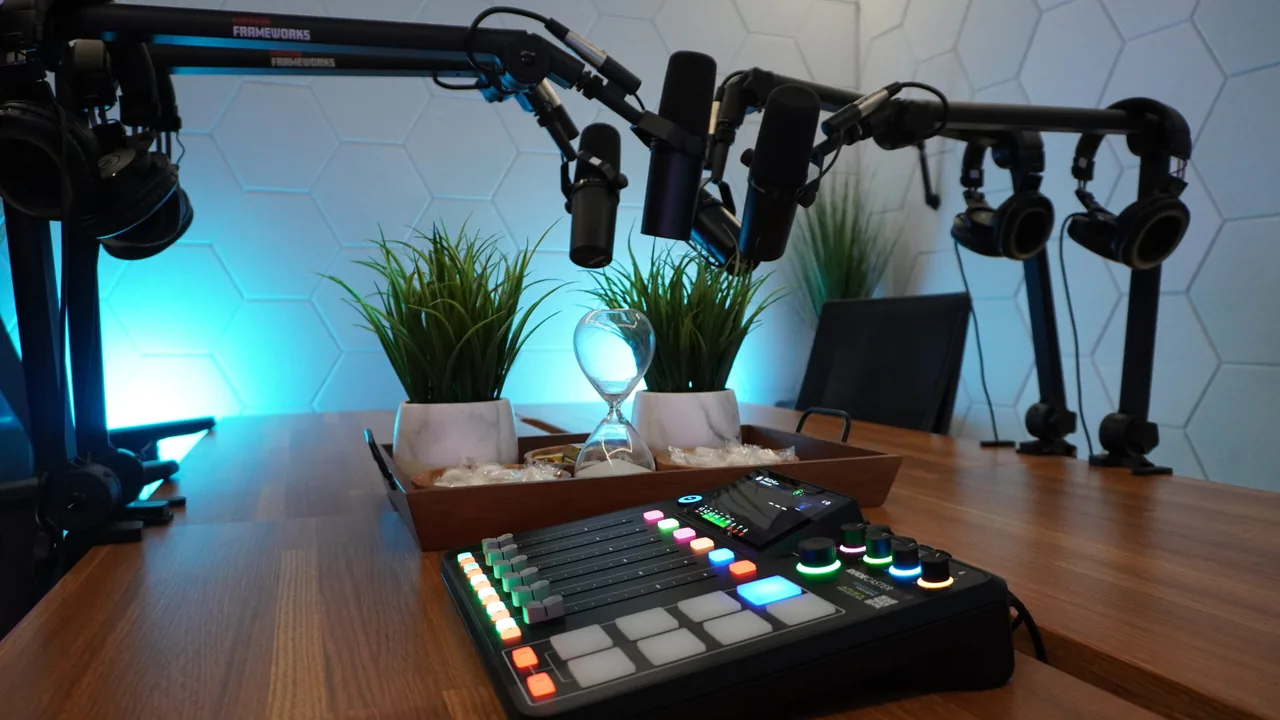
Most business podcasts don't fail because the idea was bad. They stop because nobody planned for episode eleven. New data on every podcast launched in 2025 shows exactly where shows stall and what the survivors do differently. Below is what that means for a San Antonio company that wants its show to still be publishing a year from now, plus a planner, seven differentiators, and an industry-by-industry guest playbook.
The data
What Podchaser Found When It Followed Every 2025 Launch
"Podfade" is the industry's word for a show that stops publishing without ever announcing an ending. The numbers usually quoted about it are old or based on small samples. So on October 13, 2026, Podchaser checked every podcast in its catalog whose first episode came out in 2025, all 333,723 of them, to see which were still publishing in the most recent 90 days.
Two details matter more than the headline. First, the drop-off is fast. Among shows that went quiet, 58% stopped within their first 30 days, and the median quitter released three episodes and stopped eight days after launch. Second, the famous "most podcasts die before episode seven" claim doesn't hold up. Only 3% of quitters stopped at exactly seven episodes. A third of them stopped at one.
Podchaser defined a serious launch as a show with at least three episodes, released over more than one day, that wasn't a placeholder name or an automated feed. That left 193,413 shows, and those last much longer: 58% were still publishing six months after launch. When serious shows did stop, they lasted a median of 10 episodes and about four months. For a business, that is the expensive kind of failure. Months of work, then nothing.
Explore the survivors
The Three Traits Shared by Shows That Last
Podchaser compared serious launches by episode length, publishing schedule and guest format. Pick a trait to see the share of shows still publishing. These are patterns, not proof of cause and effect, but they line up with what we see in the studio every week.
The business warning
The Line in the Study Every Business Owner Should Read
When Podchaser explained why so many 2025 shows never really started, it called out businesses by name.
"A local business publishes a feed that reads more like an ad."Podchaser, Podfade by the Numbers, Oct 13, 2026
The study found single-episode feeds from law firms and other local businesses mixed in with test uploads and placeholder shows. It's a pattern we know well. A company records one polished episode about itself, publishes it, waits for the phone to ring, and moves on when it doesn't.
The difference between that feed and a business podcast that lasts isn't production value. It's who the show is for. An ad is about the company. A show is about the listener's problem, told by people the listener wants to hear from. The company is present the whole time, as the host, the point of view and the expertise in the room, but it's rarely the subject.
The single-episode feed
- The company is the topic of every episode
- Guests, if any, are employees reading talking points
- Success is measured in calls the week after launch
- No plan past the first recording
The business podcast that lasts
- The listener's problem is the topic, and the company's expertise answers it
- Guests are customers, partners and local voices with their own audiences
- Success is measured in relationships and sales conversations over six months
- A season planned before the first session
Where shows stall
The Two Points Where Business Podcasts Fade
Podchaser's data shows two very different failure points. A business show is exposed to both, for different reasons.
- 44% of shows that went quiet never published anything after launch day.
- The median quitter in the whole 2025 class stops here.
- 58% of all quitters have already stopped.
- The median stopping point for serious launches that quit. This is the season-one wall.
- 15% of quitters stop in this range, which Podchaser says "looks a lot like a show that tried a season and didn't come back."
- Guest shows that make it this far are still publishing 67% of the time, against 50% for shows without guests.
Fade one: the 30-day drop
This is the launch that was really an announcement. Business versions usually share one cause: the show was recorded before it was planned. There was no list of guests, no episode topics past the first three, and no recording dates on anyone's calendar. Once the launch posts stop getting likes, there's nothing scheduled to keep it going.
The fix is a runway. Before launch, have at least three episodes recorded, the next three guests confirmed, and studio sessions booked for the rest of the quarter. Our studios book up to 90 days ahead, which is exactly one quarter of a biweekly show.
Fade two: the season-one wall
This one hurts more, because the show was working. It ran about four months and ten episodes, then quietly stopped. In business shows, the cause is rarely the audience. It's usually one of these:
- The guest list ran dry. The first ten guests were the host's closest contacts, and nobody built the next ring.
- The scoreboard was wrong. Leadership judged a relationship tool by download counts, saw small numbers, and pulled the budget.
- The champion got busy. The person who pushed for the show took on a bigger project, and nobody else owned the calendar.
- Approvals slowed everything down. In regulated industries, a legal or compliance review that took two days at launch takes three weeks by episode eight.
- The editing backlog won. Raw files piled up on a drive, and "we'll publish it next week" became the last thing anyone said about the show.
Each of these is a planning problem, not a talent problem. That's good news, because planning problems have fixes.
The formula
The Survival Formula, Translated for a Business
The three traits in Podchaser's data map neatly onto how a business show should be built.
Book guests
Guest shows outlast solo shows at every episode count Podchaser measured. Each guest brings a new conversation, their own audience, and a reason to share the episode.
Minutes per episode
The biggest jump is from under 10 minutes to 20 or more. Past about 40 minutes, extra length adds little. For most business shows, 25–45 minutes is the range that holds up.
Days between episodes
A biweekly show had the best survival rate (44%). Daily was the worst (28%). Every two weeks is fast enough to build a habit and slow enough to sustain.
Here's how those translate into a studio calendar. A biweekly show needs 26 episodes a year. Record two episodes per session and that's one session every four weeks, 13 a year. Most business owners can protect one morning a month. Very few can protect one every week, which is why weekly shows often slip to "whenever," and "whenever" is how podfade starts.
Length works the same way. A 30-minute guest conversation gives an editor room for two or three strong short clips, a full episode, and a transcript that answers real questions. A 7-minute solo update gives you one clip and very little reason for anyone to subscribe.
Plan it
Momentum Planner: Will Your Show Reach Episode 26?
Pick a schedule and a recording rhythm. The planner shows how many studio sessions a year and guests a quarter your show needs, and when you'll pass the two milestones that matter in Podchaser's data: episode 10, where serious shows most often stop, and episode 26, where guest shows pull clearly ahead.
Survival rates are Podchaser's figures for serious 2025 launches with at least four episodes. Milestone dates assume episode one goes live on launch day and every episode after it ships on schedule.
The differentiators
Seven Differentiators of Business Podcasts That Last
The format traits keep a show alive. These seven decide whether it's worth keeping alive. They're what separate a business podcast that wins clients, partners and recruits from one that just exists. Tap each one for what it looks like in practice.
1A listener, not a marketNarrow enough that the right person feels it was made for them
"Small business owners in San Antonio" is a market. "Owners of 10- to 50-person service companies trying to hire their first operations manager" is a listener. The narrower definition gives you sharper topics, easier guest choices and a reason for the right person to subscribe.
A business show doesn't need a big audience. It needs the right few hundred people. Ten decision-makers who listen every episode are worth more than ten thousand strangers who heard one clip.
Try this: write one sentence that starts "This show is for the person who…" If two of your last five customers would recognize themselves in it, you've found your listener.
2The host is the productListeners come back for a person, not a logo
In The Podcast Study 2026, a survey of 1,205 podcast consumers released in September, 82% said the host is a big part of, or the only reason for, listening to their favorite show. Host endorsements made listeners 57% more likely to remember a brand and 44% more likely to trust an ad.
For a business, that means the host should be someone with real authority and staying power, usually an owner, partner or senior expert. Not a rotating cast, and not whoever had a free afternoon. The host's curiosity and judgment are the brand.
Try this: choose a host who'll still be with the company in two years and who enjoys asking questions more than giving speeches.
3A point of view, with the product at the marginsThe opposite of a feed that reads like an ad
The shows that last take positions. They explain why the common advice in their industry is wrong, what a good vendor looks like, and which questions a buyer should ask before signing anything. That candor is what makes a listener trust the company behind the show.
Mention your services the way a good dinner guest mentions their job: when it's relevant, briefly, and never as the reason for the conversation. A short, clear line at the end of each episode about how to reach you is enough.
Try this: keep a running list of "things we believe that our competitors won't say out loud." Each item is an episode.
4Guests as relationshipsThe most underrated business-development tool in podcasting
An invitation to be a guest is one of the few outreach messages people are glad to get. It's a compliment, not a pitch. An hour in the studio builds more trust with a referral partner, a prospective client or a community leader than a year of email.
Podchaser's explanation for why guest shows last is practical: guests bring "a steady supply of new conversations," their own audience, and a reason to share. For a business, add a fourth benefit. Every guest leaves with a professionally produced episode they're proud of, and that goodwill compounds.
Try this: split your guest list into thirds: clients and customers, referral partners, and local voices your listener admires. Rotate between them so the show never turns into a sales call or an echo chamber.
5Answers buyers are already searching forEpisodes that keep working long after release day
Your sales team, front desk and project managers hear the same questions every week. Those questions are your best episode titles. When an episode answers them clearly, with a transcript and chapter markers, it can surface in Google, YouTube search and AI answer engines for years.
This is where a business show beats an entertainment show. A great answer to "how long does a commercial build-out take in Bexar County?" is still useful in 2028. Your reps can send it to a prospect before the first meeting.
Try this: ask your team for the ten questions they're tired of answering. Make one episode per question, and give reps the links.
6Human, local and on cameraThe proof AI-generated shows can't fake
Listen Notes counted 10,531 AI-generated podcasts launched between July and September 2026, about 29% of new shows that quarter. In research reported by Podnews in October, 66% of weekly podcast listeners reacted negatively to the idea of AI hosts, and most said they'd feel "betrayed."
As machine-made shows flood the directories, being visibly real becomes a differentiator: a real owner, a real San Antonio guest, a real room. Name the neighborhoods, the roads, the institutions and the local events. Local specifics signal trust to listeners, and they help search engines and answer engines connect your show to the city.
Try this: in every episode, have the guest share one story that could only have happened in San Antonio.
7A business scoreboard and a six-month horizonJudge it like a relationship tool, because it is one
Downloads matter, but they're the wrong headline number for most business shows. Track what the show was built to do: guests who became clients or referral partners, prospects who mention an episode, episodes your reps send in the sales process, candidates who say they found you through the show.
Set the first review at six months, not 30 days. Podchaser's data shows that serious launches that stop tend to do it around month four. A six-month review commits the company past the wall before anyone judges the results.
Try this: add "How did you hear about us?" to every intake form, with "Our podcast" as an option, before episode one goes live.
The San Antonio advantage
San Antonio's Guest Benches, Industry by Industry
Guests are the trait most tied to survival, and San Antonio is a remarkably good place to find them. The city's biggest industries are full of experts who rarely get asked to tell their stories on camera. Pick your industry for the local context, the guest bench, episode series that keep momentum, and the compliance points to plan around.
The South Texas Medical Center covers more than 900 acres. A UTSA study of 2022 data found it supported more than 86,000 jobs paying $5 billion in wages.
Guest bench
- Physicians, nurse leaders and practice owners
- Researchers and educators from the Medical Center's institutions
- Practice managers and health-tech founders
- Community health nonprofits and patient advocates
Series that keep momentum
- "What patients ask after the appointment": one common question per episode
- "Inside the specialty": career-path conversations that double as recruiting
- Seasonal health topics tied to San Antonio life: summer heat, allergy season, back-to-school
Plan around
Never discuss information that could identify a patient. Patient stories need written authorization. Keep episodes educational and say on air that they aren't individual medical advice.
Momentum move
Your front desk already knows the top twenty questions. Record solo answer episodes in the solo studio between guest episodes, so the show keeps publishing when clinicians' schedules fill up.
Differentiator
Trust. Health decisions are personal, and a familiar local clinician's voice carries further than a national brand.
Joint Base San Antonio is the Department of Defense's largest joint base. JBSA describes it as 80,000 full-time personnel, with a local community of more than 250,000 military retirees.
Guest bench
- Veteran business owners and transitioning service members
- Military spouses running businesses
- Retirees in second careers
- Defense contractors and veteran-serving nonprofits
Series that keep momentum
- "The first year out": transition stories and the advice guests wish they'd had
- "Mission to market": how military skills became a business
- Military-spouse entrepreneurs, told in their own words
Plan around
Service members and DoD civilians usually appear in a personal capacity unless their public affairs office approves an official appearance. Include a short "views are my own" disclaimer, avoid implying government endorsement, and keep anything operational off the table.
Momentum move
Veterans refer veterans. Ask every guest for two names before they leave the studio, and your guest list grows faster than you can record it.
Differentiator
Credibility through shared experience. In Military City USA, a show that understands rank, PCS moves and transition earns an audience fast.
Port San Antonio's 1,900-acre campus hosts more than 80 tenants and roughly 19,000 workers, and Sixteenth Air Force (Air Forces Cyber) is headquartered at JBSA-Lackland.
Guest bench
- Security leaders and managed-service owners
- Aerospace, robotics and manufacturing founders
- Workforce programs, instructors and recruiters
- Business owners who recovered from an incident
Series that keep momentum
- "Explain it to the owner": one threat or technology per episode, in plain English
- Anonymized incident walk-throughs: what happened, what worked, what to do Monday
- Hiring and career-switch episodes that also support recruiting
Plan around
No client names, no details that identify a victim, and nothing about vulnerabilities that aren't patched yet. Guests who hold clearances should check with their security office before recording.
Momentum move
Pair news-driven episodes with evergreen explainers you keep in the bank. When a slow news week comes, the show still ships.
Differentiator
Translation. Most tech content is written for other technologists. A show that makes the buyer feel smart, not lectured, stands out.
Law, accounting, financial planning and insurance. Podchaser's study named single-episode feeds from law firms among the 2025 shows that never really started. The opportunity is the inverse: a firm show that sounds like counsel, not an ad.
Guest bench
- Referral partners: CPAs for law firms, attorneys for CPAs, bankers for both
- Clients who have given written permission
- Chamber and trade-association leaders
- Business owners at the decision points you advise on
Series that keep momentum
- "What I'd tell a friend": plain-language explainers on common decisions
- Deadline episodes: tax season, open enrollment, year-end planning
- Referral-partner roundtables in the four-person studio
Plan around
Attorneys should review episodes against the State Bar of Texas advertising rules. Financial professionals should route testimonials and any talk of performance through compliance. Frame everything as general information, not advice.
Momentum move
Your year has built-in peaks. Bank episodes before the busy season, because nobody in an accounting firm is recording in April.
Differentiator
Approachability. Clients choose advisors they already feel they know, and twenty minutes of your voice does that better than a bio page.
Neighborhood knowledge is the one thing national listing sites and lead-generation platforms can't copy. From Alamo Heights to Stone Oak to Southtown, every part of San Antonio has its own story.
Guest bench
- Lenders, inspectors, architects and title partners
- Subcontractors and suppliers
- Neighborhood association and community leaders
- Past clients and local developers
Series that keep momentum
- "Neighborhood by neighborhood": history, housing stock and what's changing
- "Before you build": permits, timelines and budgets in Bexar County
- "Fix it or sell it": decision episodes with a contractor and an agent at the same table
Plan around
Follow fair-housing rules on air as carefully as in a listing. Describe homes, amenities and commutes, never who a neighborhood is "right for."
Momentum move
Every closing, project and inspection introduces you to a potential guest. Keep a running list and ask at the handshake.
Differentiator
Local depth. A show that knows why one street floods and the next one doesn't is the show buyers trust.
San Antonio's calendar builds episodes in. The Stock Show & Rodeo comes every February and Fiesta every April, and locals and visitors both want to know the people behind the places.
Guest bench
- Chefs, owners and general managers
- Farmers, ranchers and suppliers
- Festival and event organizers
- Neighboring businesses and longtime regulars
Series that keep momentum
- "Where the menu comes from": one dish or product, one supplier
- Seasonal guides built around Fiesta, the rodeo and the holidays
- "Block by block": neighboring owners on the street you share
Plan around
Get on-camera releases from staff and guests. Never play copyrighted music in the background of a recording, because it can block the episode on YouTube.
Momentum move
Record seasonal episodes a month early and schedule them. Your busiest weeks are the worst time to be in a studio.
Differentiator
Personality. People don't remember a menu. They remember the owner who told the story behind it.
Stay specific, keep it fresh
Staying Industry-Specific Without Running Out of Road
The quiet fear behind a lot of business podfade is "we'll run out of things to say." Narrow shows don't run out of topics when they rotate formats. Here's a quarterly rhythm for a biweekly show: six or seven episodes from three or four studio sessions.
| Format | Per quarter | Why it keeps momentum |
|---|---|---|
| Guest interview | 3–4 | New voice, new audience, and a guest with a reason to share. This is the format most tied to survival. |
| Solo answer episode | 1–2 | Answers one buyer question in depth. Fast to record in the solo studio and evergreen in search. |
| Roundtable | 1 | Three or four past guests or partners at the table debating one industry question. Five cameras give the edit plenty of clips. |
| Case story | 0–1 | A client tells the before-and-after in their own words, with permission. The most persuasive episode you'll publish. |
Rotation also protects the host. A solo episode can be recorded when no guest is available. A roundtable turns past guests into repeat participants. A case story gives the sales team something to send. Variety is less about entertainment than about never having a week where the show can't ship.
Keep the fire lit
Seven Momentum Rules for Getting Past Month Four
- Keep three guests confirmed at all times.When one records, book the next. A guest list three deep is the single best defense against the season-one wall.
- Put sessions on the calendar a quarter ahead.Recurring dates turn the show from a project into a habit. Treat a session like a client meeting and protect it.
- Bank at least two episodes.Travel, a busy season or a sick guest shouldn't break your publishing schedule. A bank of two buys a month of cover on a biweekly show.
- Decide season two before season one ends.Podchaser's 11–25 episode drop-off looks like seasons that never came back. If you take a break, announce the return date on air.
- Remember that your latest episode date is your storefront.Podchaser advises brands and PR teams to check a show's latest episode date before they book or buy. Prospects read a quiet feed the same way. Recency is credibility.
- Hand off what happens after recording.Editing, clipping, captions and publishing are where most business shows stall. When the host's only job is the conversation, the show keeps moving.
- Tie the calendar to the city.Fiesta, the Spurs season, the Stock Show & Rodeo, and the Texas Legislature convening in January 2027 all give industry shows timely hooks that local listeners care about.
If you're starting from zero, our guide to launching a podcast in San Antonio in five steps covers the setup. This article is the part that comes after: keeping it going. When the show is ready to earn, read about engaged views and building a 2027 media kit.
Keep reading
Related Guides From the Studio
Frequently Asked Questions
What percentage of new podcasts quit?
About three in four. Podchaser followed all 333,723 podcasts that launched in 2025 and found that 22% had published an episode in the 90 days to October 13, 2026 by catalog dates, or about 25% after checking feeds directly. Among serious launches, meaning shows with at least three episodes released over more than one day, 35% to 39% are still publishing.
When do most podcasts stop publishing?
Very early. Among 2025 shows that went quiet, 58% stopped within 30 days, 44% never published anything after launch day, and the median quitter stopped after three episodes. Serious shows that stopped lasted longer, a median of 10 episodes and about four months.
How often should a business podcast publish?
About every two weeks is the strongest choice in the data. Among serious 2025 launches with at least four episodes, 44% of biweekly shows are still publishing, compared with 40% of monthly shows, 39% of weekly shows and 28% of daily shows. For most businesses, biweekly means one studio session every four weeks, recording two episodes.
How long should a business podcast episode be?
At least 20 minutes, and usually 25 to 45. Only 21% of serious launches averaging under 10 minutes are still publishing, against 43% of shows averaging 40 to 60 minutes. Podchaser found the biggest gain comes from moving past very short episodes. Above about 40 minutes, extra length makes little difference.
Do guest interviews help a podcast last longer?
Yes. Comparing English-language shows with the same number of episodes, 41% of guest shows with 11 to 25 episodes are still publishing against 23% without guests, and 67% against 50% at 26 to 52 episodes. Guests bring new conversations, their own audiences and a reason to share each episode.
Is it true most podcasts quit before episode seven?
Technically yes, but seven isn't special. Only 3% of 2025 shows that went quiet stopped at exactly seven episodes, about the same as six or eight. Most quitters stop before episode seven because a third of them stop at episode one.
How many studio sessions does a biweekly business podcast need?
About 13 a year. A biweekly show publishes 26 episodes a year, so recording two episodes per session means one session every four weeks. Booking a full quarter of sessions ahead, and keeping at least two finished episodes in the bank, gives the show cover for busy seasons and cancellations.
Plan Your First Season
Build the Show Before You Hit Record
Bring your industry, your listener and the people you'd love to interview. We'll help you map a first season of guests, topics and studio dates, then handle the editing, clips and publishing after every session, so the only thing on your calendar is the conversation.
Sources
- Podchaser: Podfade by the Numbers: How Many of 2025's New Podcasts Are Still Going? (Oct 13, 2026)
- Podcast News Daily: Podcast staying power, new data reveals format and frequency matter
- Podnews: The Podcast Study 2026 (Sept 15, 2026)
- Podcast News Daily: Podcast activity approaches record highs despite fewer Q3 launches (Listen Notes data, Oct 9, 2026)
- Podnews: The Podcast Landscape 2026 and AI host research (Oct 1, 2026)
- San Antonio Report: South Texas Medical Center economic impact (UTSA study of 2022 data)
- Joint Base San Antonio: 502d Air Base Wing leadership (mission partners, personnel and retiree community)
- Texas Public Radio: Port San Antonio becomes SA's key economic engine (Apr 12, 2026)